Saffron Uprising
Visiting Burma: Magic & Morality
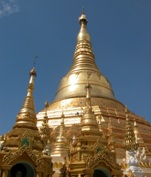
I visited the Shwedagon Pagoda two months before it became embroiled in the shocking “Saffron Revolution” of 2007.
This is the “beautiful winking wonder” that so enraptured Rudyard Kipling as he sailed into port on his first colonial visit over a century ago, he wondered, “Under what new god … are we irrepressible English sitting now?” – to which the pagoda replied, “This is Burma, and it will be quite unlike any land you know about.”
“You’ve got to check out the Shwedagon,” my friend, a long-term Burma resident, had urged. “It will change your life.” He was vague about the specifics of the life-changing, so I went, on my last morning in Yangon.
The pagoda has hosted pivotal moments in Burma's struggle for democracy. Both General Aung San and his daughter held historic rallying calls there. Shortly after my visit, the temple became base camp for 20,000 protesting monks and nuns – before being forcefully reclaimed then occupied by armed militiamen.
But that morning all was peaceful; the sun’s dawn rays were beginning to fizz off of the mounted golden spire. I was sitting beneath the shade of a temple bow, watching the faithful make their reverential morning pilgrimages: people of all ages sharing a soft-stepping communion.
The mesmerising ambiance of guttural chanting was punctuated intermittently by the soft clang of prayer bells. The effect was spine-tingling; it felt like time had paused to take a rejuvenating breath.
Presently, I noticed a lone monk, a man who looked to be in his twenties, circumnavigating the sloped base of the glittering spire. He began to climb purposefully, finding foot and hand-holds where none could be seen.
He confidently ascended, never pausing to take stock; sometimes moving out of view, but always seeming to know exactly where he was going. He mysteriously disappeared – as if melting into the ether or ascending to Nirvana – at a point just before his climb hit the sheer vertical spire.
I glanced to my side and noticed a couple of other monks staring after him in fascination, bearing expressions of abject, jaw-dropped wonder. It was strangely reassuring that they found the spectacle as compelling as I. Life changing? It was magical and unforgettable.
The monks’ rapt expressions reminded me of a photo my friend had described, depicting the junta generals sitting round a conference table and looking up with saucer-eyed stares at Ibrahim Gambari, upon the Nigerian diplomat’s inaugural mission as the UN’s special envoy to Myanmar.
 Like his UN colleagues before and since, the unfortunate Gambari never made much progress with Burma. His mission there started in 2006. By 2008, the Associated Press reported that “Gambari remains the butt of jokes among many in Burma, after his futile attempts to revive a moribund dialogue between Suu Kyi and the generals.”
Gambari’s ill-fated example illustrates how good intentions often aren’t enough. And the presence of any UN envoy at all is a reminder of the ethical quandary presented by visiting Burma: Does tourism help sustain a military dictatorship that’s been trampling all over human rights for decades? This conundrum has been much debated since the onset of a tourism boycott in 1995 – initially an international response to the “Visit Myanmar Year” tourism drive planned for 1996, after it was revealed that hundreds of thousands of labourers were being forced to toil on roads, runways and visitor attractions.
Spearheading the boycott was no less than democracy icon and Nobel Laureate for Peace, Aung Sang Suu Kyi. In 1995, “the Lady” herself said, “The bulk of the money from tourism goes straight into the pockets of the generals.” This fit with her long-held approval of sanctions as means of pressuring the military government to reconcile with the democracy movement.
However, as with everything concerning Burma, it’s not that simple. There are divergent interpretations of Suu Kyi’s varying views on tourism. And, just as the American administration recently reviewed its isolationist policy and changed course – October saw its first high-level contact with Burma’s government for nearly a decade, tentatively welcomed by Suu Kyi as “a good thing” – it seems that the saintly woman is now finally prepared to cooperate with the junta to have sanctions lifted.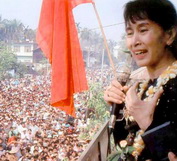
Perhaps her famous resolve has been dissolved by spending 13 of the past 20 years under house arrest. Maybe she’s resigned to the fact that, now the junta has established profitable trade ties with powerful regional neighbours, international sanctions are doomed to continual failure, and realises the only way forward is to engage with the enemy.
However, to go or not to go – to engage or isolate Burma – remains a pertinent question perpetually troubling tourists, activists and politicians alike. Lonely Planet offers a helpful downloadable 14- page précis on the moral considerations involved. From the hoard of pros and cons contained within, two pointers jump out:
Firstly, according to Lonely Planet (using CIA statistics), “Myanmar receives, at most, 0.7% of its GDP through tourism”.
Secondly and perhaps more importantly:
“The temples and mountains and markets are lovely, but ultimately a trip to Myanmar is mostly about the people. After we spent a few hours in Bagan with a Nat expert researching this book [Lonely Planet Myanmar (Burma)], for instance, the grey-haired local, offering a second cup of tea in his home, said, ‘I’ll remember you for the rest of eternity.’”
www.lonelyplanet.com/myanmar-burma
-- For 7Days, 2009 / See layout / Read Joel's essay on Scwedagon Pagoda