Location Thailand
One doesn’t normally associate Bangkok with cinema, but the city's  film-loving residents are pretty spoilt. Screenings are dirt cheap, for starters, and there’s an abundance of those slick, modern multiplexes dotted round town, boasting things like the latest Dolby Digital doo-dah and Gold Class, which is an entire theatre full of love seats silver-served by jewellery encrusted stewardesses.
But such baubles are superfluous – especially when you consider the first public screenings in Thailand. Movie prints were originally circulated round the rural provinces projected from the backs of trucks, onto sheets hung between trees at the local fair. The dialogue and sound effects, augmented with ad-hoc regional references and topical humour, would be performed live by the canny projectionist.
In Bangkok, the Scala, the most decrepit movie theatre in the city, is tucked away among the chewing gum they keep on Siam Square soi one. It’s about the only proper, theater-style cinema to survive the multiplex glut, and it’s a grand one at that; little wonder the Bangkok International Film Festival uses it for its celebrity-speckled ceremonies. You don’t go for the legroom or comfiness; in fact, the seating’s pretty cramped. You go for the plush, faded grandeur of the surroundings; to rediscover the ambiance of cinema’s golden age, before it mattered about flicking your mobile phone into silent profile, or downloading the Lord of the Rings trilogy onto your palm pilot.
Aside from having the projector, the staff there denies the existence of technology: they write out your ticket for you, with a ballpoint pen and an ink stamp and everything, and the confectionary counter is rubbish, and doesn’t even have one of those back-lit Coke-foisting soft drink setups. It’s great. Cavernous and atmospheric, it can be a heaven-sent relief taking refuge from Bangkok’s sweltering, clamorous congestion in a cool, darkened oasis, huddled beneath a cosy hooded top to combat the overzealous air-con.
The hood can also serve to blinker out annoying punters in your peripheral vision, such as the inbred sex-tourist type who blighted one screening by explaining every miniscule plot development to his Thai “girlfriend” in a grating Midwestern drawl – this despite the movie’s accompanying subtitles. To be fair, though, he actually became more interesting than the feature itself when his fascinating Tourretts-style affliction surfaced. “Asshole!” he gibbered involuntarily at Billy-Bob Thornton.
By the time he exclaimed “dur-dur-DOMINATRIX!” at a particularly silent juncture in the soundtrack, his mortified companion, who’d been knawing her arm off in horror, walked out. (I’m pretty sure it wasn’t Bernard Trink in his days as The Bangkok Post’s resident movie scribe. A friend, Wesley, who writes infinitely superior film criticism for MovieSeer, the website I used to edit, once told Trink, perfectly justifiably, his reviews were “really bad” to his face, but the infamous connoisseur of Third World prostitutes just shrugged in an ostentatious display of, to quote his doomed column, "Not Giving a Hoot".)
But aside from the therapeutic escapism that a trip to the flicks can bring, aptly illustrated by the aforementioned Tourretts episode, watching Thai movies can be an instructive, enlightening experience. While it’s all too easy to submit yourself to the latest effects-heavy Hollywood no-brainer, checking out the local movie scene can help shed light on Thai culture – invaluable if you’re new in town and looking to bone up on Thai ways. And when you think about it, and I just have, domestic films, when combined with other cultural influences, are important in helping shape Thailand’s national image, as perceived by the outside world.
Just over a decade ago, the dictionary publisher Longman was forced to apologize to the Thai government after defining Bangkok as "a place where there are a lot of prostitutes". The incident highlighted how little control developing countries have over their global image (although admittedly it didn't help when the deputy finance minister was caught hiring call girls a few weeks later). But a resurgent film industry can also help Thailand win some semblance of control over its own identity.
Admittedly, picking a worthwhile movie can be a game of pot luck: it’s sometimes hard to find English language reviews for Thai films. I’d say you generally want to avoid the garish-looking comedies: they tend to be unbearable slapstick farces full of squawking ladyboy stereotypes, and are usually devoid of charm and humour.
But persevere and you’ll prosper: I learnt oodles about upcountry folklore just from watching Mekhong Full Moon Party, which details the alleged  fireball-spewing bent of the mythical naga serpent. Jira Malikul’s film tactfully counter poses this ancient Buddhist superstition with modern thought on where the great balls of fire, which mysteriously rise at annual intervals from the depths of the Mekhong River, really originate from.
The much vaunted Thai tolerance was pertinently evidenced in Beautiful Boxer, perhaps the ultimate sports underdog film for demonstrating how an effeminate gayboy, Parinya “Nong Toom” Charoenphol, not only survived an abrasive Thai boxing camp, but actually emerged a gender-bending kickboxing pro. Not so much “kiss and makeup” as “kicks and makeup”, this intriguing and competently made true-life story also contains worthwhile insight into the challenges and pressures – both genetic and social – facing today’s Thai transsexuals.
But while martial arts purists sneer at Nong Toom’s ring-bound mincing, they worship at the chop-socky altar that is Ong Bak, a brutally violent, exploitation-tinged B-movie, which showcases the acrobatics of Isaan stunt master Phanom Yeerum (who’s now operating under the snappier screen name of Tony Ja). Using Muay Thai’s long forgotten but more elegant manifestation, Muay Boran, Phanom’s character metes out fierce punishment to an unseemly bunch of farangs in illegal street-fighting bouts. 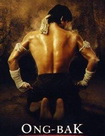
The bone-crunching fight scenes are alarmingly realistic, and when you throw in Phanom’s astonishing repertoire of audacious stunts (including sliding under moving trucks and triple somersaulting over sizzling woks), you have a bonafide kung fu cult classic – enlivened with a pinch of original Thai spice. And you can expect to see Tony Ja’s name up in lights: he may or may not have the acting chops, but that doesn’t really matter for an action star – I predict he’ll become the first Thai actor to make it in Tinsel Town.
It’s also a sign of a healthy movie industry when films expose the skeletons in the collective national closet, addressing issues the flighty Thai government is desperate to suppress via sanctimonious social order campaigns, or at least usher behind closed doors by curfew time. The Thai Film Censorship Board plays an antiquated role as an outdated cultural gatekeeper, manned as it is by cops and bureaucrats who are clueless about film, yet police cinematic offerings in accordance with a hopelessly puritanical 1903 Film Bill.
All societies need some form of censorship, of course, but Article IV of the bill forbids “negative” portrayals of government officials, political issues, criminal acts, torture, royalty and religious defamation, graphic sexual content or obscenity, on screen. For over 100 years, these ancient regulations have cramped filmmakers’ freedom of expression, discouraging them from incorporating social issues into their scripts. To play it safe, many don't risk tackling “sensitive” issues for fear of being shut down.
And the result of this pious ethical supervision is the censors’ cack-handed blurring of onscreen nipples and, Buddha forbid!, those morally injurious cigarettes, giving the effect of Vaseline smeared liberally over offending body parts, questionable protrusions and drug paraphernalia.
With this in mind, it’s a wonder films like Oxide Pang’s Som + Bank: Bangkok For Sale – available on DVD with English subtitles – slip through the net. It’s a gritty, seamy account of the problems currently associated with Thai youth – teenage prostitution, copious drugs and, perhaps worst of all, auto-eroticised karaoke – all splashed luridly across the big screen.
Then there’s the memorably titled Ai Fak (The Judgement), a bitter adaptation of an award-winning novel by social critic Chart Kobjitti, which highlights the dangers inherent in mindless collective conformity. The  traditional rural community in the film herds like sheep, circulating hateful, inaccurate gossip, before rounding upon an honourable villager who happens to be a bit different, then kicking him into submission as if he were a rabid dog. Thais are an extremely close-knit bunch: the nationalistic ruling party is called Thai Rak Thai – literally "Thais Love Thais" – and few films deliver such sober-eyed and aggressive questioning of social hypocrisy as the laudable Ai Fak, so the film rings with amplified resonance.
But I suppose one of the most outstanding, if likely inadvertent, cinematic middle fingers I’ve seen extended towards the authorities came from the hand of the art-film auteur, Apichatpong Weerasethakul. The uncompromising Khon Kaen native won the 2004 Cannes Film Festival competition, presided over by Quentin Tarantino, with his weird gay-supernatural-love-myth Tropical Malady; but he had already garnered attention with the equally bizarre Blissfully Yours, which won a lesser award at a previous Cannes.
I caught a private screening of the meandering art-house reel before the censors got to it, and watched with astonishment as an elderly couple rutted for real in the jungle, as if their very pensions depended upon it. The old fellow finishes his horizontal workout, then rips off his jizz-laden condom and flings it into the bushes.
And just when I thought Apichatpong had played his trump shock card, he followed that up with a scene of a girl masturbating her sleeping boyfriend, in a 5-minute-long close-up of his gradually hardening penis. I’m not too sure if I learned anything from that, culture wise, but it was amusing to see the director waiting curiously by the exit to study peoples’ bemused faces as they left the theatre.
But all of these movies, illicit willy shots and all, are part and parcel of the immersive experience one undergoes after relocating somewhere strange. Local film culture helps define national self-image, and also helps explain the place you’re in, by colouring in some of the grey areas. Try it; you might find, as I often do, that you not only temporarily escape the heat, pollution, traffic and noise, but exit the cinema later with a somewhat lightened step.
-- 2004, Unpublished