War Profiteering
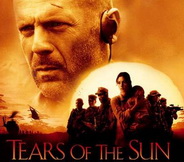
The Bush administration could barely have asked for a more beneficial piece of widescreen propaganda than Tears of the Sun. This combat thriller sends Bruce Willis into the African jungle, leading a squadron of conscience-stricken warriors, in an imperialistic raid to save Nigerian refugees from ethnic cleansing. An apocryphal rebel junta has assassinated the presidential family, and is sweeping the country, slaughtering everyone in its path.
To be fair, it doesn’t require a massive suspension of disbelief to imagine something like this happening in Nigeria, a country whose history is littered with tin-pot dictators, massacres, bloody civil wars and human rights abuses. As evidenced by the 2002 Miss World farrago, the nation could potentially burst into violent chaos at any time. From this context, it’s interesting to note that Antoine Fuqua, (Training Day) reportedly intended to make a serious Black Hawk Down-style chronicle of African genocide, but was pressured by Willis, obviously reneging his 2001 pledge to cease making "save-the-world" movies, into churning out this sentimental tribute to U.S. military intervention. A quote from Waylon Jennings, speaking about the movie on his former bandleader Buddy Holly, springs to mind: "It would have been so much better if they'd told the real story." Tears Of The Sun opens with newsreel footage of a citizen being publicly executed in the streets of Abuja; using this real-life atrocity as a potent garnish for an escapist Hollywood fantasy smacks of distasteful exploitation.
A resoundingly slap-headed Willis plays grizzled Navy SEAL lieutenant Waters, assigned to evacuate vulnerable US citizens from their isolated jungle mission before the murderous roaming rebels arrive. However,  dedicated medic Dr. Lena Hendricks (bosomy Italian actress Monica Bellucci) refuses to abandon her brood of refugees, so Waters pragmatically consents to escort the able-bodied natives out of hostile territory. But before you can say “double-crossing ruse”, Waters forces Kendricks to abandon her patients by manhandling her into a rescue helicopter. However, as they flee skyward, Waters has a conscience attack and turns the chopper around but, denied additional transportation by his superior (Tom Skerrit, seemingly permanently attached to a satellite phone), Waters must now trek on foot to the refuge of the Cameroon border with his adopted troop of beleaguered Nigerians.
Waters’ impromptu about-face has jeopardized both his squadron and his mission; one of his men asks what incited this unprecedented bout of humanism. "When I figure that out, I'll let you know," he responds. Willis, in the weary, stoical mode he’s favored since abandoning the smart-ass smirk that made him a star, is so taciturn we’re left to assume he just wants extra time to gawp down Belluci’s conveniently unbuttoned blouse. Later he says, somewhat unconvincingly: "It's been so long since I've done a good thing -- the right thing." The discourse occasionally lapses into such over-the-top unrealism, but mercifully the dialogue takes a back seat to the cinematography, which makes striking use of the lush expanses of Hawaii to recreate saturated African rainforests.
The scenes of ethnic cleansing are extraordinarily powerful. Waters’ helicopter passes over Kendricks’ besieged mission camp, which has been devastated by the revolutionaries, to apocalyptic scenes of rape, murder and burning tires. Then later, the unit chances upon faceless rebels “cleansing” a jungle village, complete with ritualistic machete mutilation, feral child soldiers and more sadistic defilement. It’s chillingly realistic, but the problem lies within the treatment of these scenes: creating a make-believe revolution equates to a mix ‘n’ match collage of recent real-world atrocities, evoking wars in Rwanda, Uganda and Burma - but here made-to-order for Hollywood. And when Willis and co. intervene, cleansing the ethnic cleansers with US bullets, this is how George Bush would like Americans to be viewed: as great soldiers and moral guardians, rescuing helpless civilians from genocidal regimes. There’s also the troubling and tired re-treading of that movie convention that uses the sufferings of the third world as a backdrop for the moral agony of white people.
But if it’s self-deluding mush on a philosophical level, Tears Of The Sun is still watchable stuff. Furqa capably builds the tension at the right times, and the battle elements are often interesting. The soldiers who, in the case of the Navy SEALS, are reasonably sketched rather than completely anonymous, strike in formation, rather than the heroic individualistic Rambo-esque flailing favored by, er, Rambo et al. Willis has never looked more photogenic than here, his chiseled features offset by the perspiration beading on his camouflage makeup. But while there’s no law against attractive women enrolling in Doctors Without Borders, the feisty Bellucci still seems too  glamorous for her role (at least the unspoken attraction between her character and Willis’ remains unconsummated); and the Africans are portrayed as either helpless wide-eyed innocents or vicious henchmen. Skerrit is also astonishingly forgiving of his renegade subordinate unilaterally declaring war on Nigeria, this despite Waters’ orders being to engage the enemy “only when fired upon.” In the end Tears Of the Sun wears its big tub-thumping Tinsel town heart on its sleeve, retreating into the safe Hollywood suburbs with a ridiculous, fantastical climax.
I wish the ambiguous contradictions of the SEALS' evolving mission were more fully explored; if the movie addressed, as Three Kings did, the battlefield clash between humanity and orders, cynicism and idealism. But the screenplay never seriously attempts to explore the issue of whether the U.S. should play the world's policeman. In fact, the director glosses over these considerations using a well-known quote by British statesman Edmund Burke to close the film. "All that is needed for the triumph of evil is for a good man to do nothing."
It’s hardly a meaningless platitude, but whether it amounts to sufficient justification for what went before -- or indeed what’s happening in Iraq -- remains a controversial moot point.
-- Published by MovieSeer.com, 2003