Thumbs up for "Blackberry Massage"?
Alternative therapies, holistic treatments, Eastern remedies – and most offerings on today’s spa menus – have made limber forward strides in recent years (perhaps due to their proponents’ increased flexibility etc).
Sensual spa stuff was once scorned as quack fluff, partly because the remedial benefits of massage were (and remain) notoriously difficult to assess. Wildly swinging spa industry standards were likewise haphazard. Unsurprisingly, supposedly healthful frisking suffered an image problem – part of a prevailing conservatism that relegated anything alternative to the domain of The Weird; manna for hippy-dippy, patchouli-sniffing freaks.
But why argue with what your body feels? Ninety-one percent of all people adore the relaxing afterglow of an occasional massage (and the remaining thirty-six percent would, if only they'd try it).
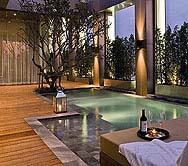
We’re particularly spoiled for choice in Southeast Asia: some of the region’s spas rank among the world’s finest, with stunning designs, plush furnishings, luxury accoutrements and no detail spared; often graced by an intuitive service so conscientious it’s risen to a virtual art form. The tactile sensitivity of superior practitioners can cause paroxysms of bliss. (I once experienced visual and auditory hallucinations while undergoing intense ‘Balinese’ deep-tissue kneading at The Banyan Tree Spa. A freaky eyes-closed laser-and-echo show and off-menu bonus.)
In industry terms, spa-style treatments have graduated from beardy mumbo-jumbo to legitimate complementary medicines. They enjoyed a watershed (or should that be ‘aqua-spritz’?) in May 2009, when the UK’s National Institute for Health and Clinical Excellence explicitly backed complementary therapies for the first time, recommending NHS-funded acupuncture or massages to patients with chronic spinal pain.
So far, so progressive. But there’s always someone who takes things too far.
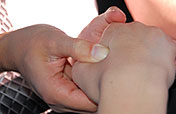
Responding to the ever-growing army of cashed-up gadget addicts welded to their Blackberries, iPhones, touch-screen devices or random hand-held pose-pads, Bangkok’s VIE SPA is offering a 30-minute, warm oil “Blackberry Thumb Massage” for Bt1,500 (US$46).
That’s an entire half- hour massage – dedicated to your two thumbs. Fifteen minutes per posh, oily thumb-twiddle. Or maybe even 30 devoted singularly to your one Blackberry-using thumb. Do recipients get a token shoulder rub at the end for their money’s worth? The 98 percent remainder of me would surely feel cheated after a massage that left only my paltry thumbs rejuvenated.
Let’s be honest. “Blackberry Thumb” is really just plain, old-fashioned RSI (Repetitive Strain Injury) cursorily renamed by public relations spin. It’s just another example of Capitalism’s boundless capacity for ‘diversification’ when it sniffs out a new (aromatic) market segment.
There’s something disconcertingly crap about it. I know it’s a drop in
the lotion; after all, those promotions have to keep revolving – but honestly.  Thumb massage? Spa
twiddle-twaddle, more like. Yet, hi-sos, wannabes, fashion
victims and yuppies will probably flock for a cheeky thumb-job. Some even flaunting
their absurd big-digit mauling as a conspicuous
status symbol; a valiant war wound in the ceaseless quest
for increasingly trite Tweets. Ugh!
Thumb massage? Spa
twiddle-twaddle, more like. Yet, hi-sos, wannabes, fashion
victims and yuppies will probably flock for a cheeky thumb-job. Some even flaunting
their absurd big-digit mauling as a conspicuous
status symbol; a valiant war wound in the ceaseless quest
for increasingly trite Tweets. Ugh!
I like massage – but I’m with BKK Magazine on this one:
“If your Blackberry Messaging addiction has got your thumbs all screwed up, you probably need to put your phone down and get a life”.
Enough said.
-- Unpublished, 2010